
Now Reading: DSS Transfers IPOB Leader Nnamdi Kanu to Sokoto Prison After Life Sentence
-
01
DSS Transfers IPOB Leader Nnamdi Kanu to Sokoto Prison After Life Sentence

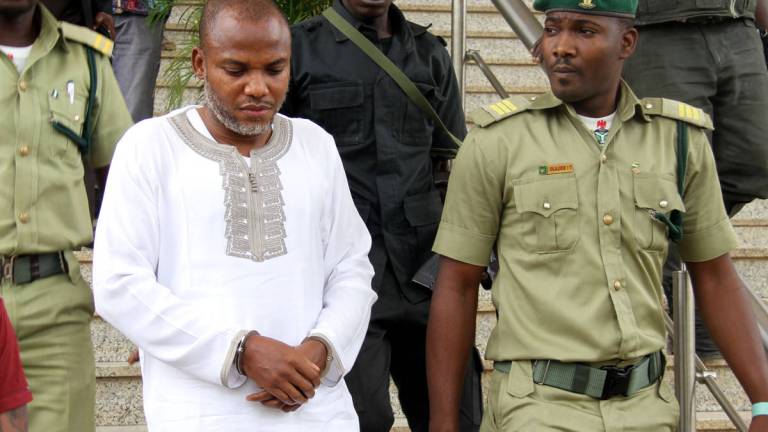
In a bold move by Nigeria’s security apparatus, Nnamdi Kanu, leader of the Indigenous People of Biafra (IPOB), has been transferred from the custody of the Department of State Services (DSS) in Abuja to a high‑security correctional centre in Sokoto State.
The development, confirmed by his former lawyer, has raised the alarm over his access to legal representation and family. Daily Report
How the Transfer Unfolded
Less than 24 hours after the Federal High Court in Abuja sentenced Kanu to life imprisonment on terrorism-related charges, the DSS reportedly carried out the relocation.
The court, presided over by Justice James Omotosho, convicted him on all seven counts, prompting the security agency to act swiftly.
His legal counsel, Aloy Ejimakor, first sounded the alarm :
“MAZI NNAMDI KANU has just been moved from DSS Abuja to the correctional facility (prison) in Sokoto; so far away from his lawyers, family, loved ones and well‑wishers.”

Family Concern and Security Warning
Kanu’s family has strongly rejected the move, describing it as a veiled strategy to further isolate him. Prince Emmanuel Kanu, speaking on behalf of the family, claimed the relocation might jeopardise Kanu’s health, alleging that
READ ALSO :
-
Police and Military Mobilize to Save Kidnapped Students in Niger State
-
Shettima Departs Abuja to Represent Tinubu at G20 Leaders’ Summit
-
Peller Detained in UK During Livestream Following Noise Complaint (VIDEO)
-
“Nigeria Is Stable Enough”: Wike Addresses PDP Faction’s Call to a Former U.S. President
“they have secretly relocated … with the intention to kill him by denying him access to his personal physicians.”
Prince Emmanuel also called on the international community to hold President Bola Tinubu and the federal government accountable should anything untoward happen to Kanu while in Sokoto.
Court’s Rationale and Conditions
Justice Omotosho, in his judgment, authorized the DSS to transfer Kanu to any custodial centre across the country, citing serious national security concerns.
The judge described Kanu as a person with “violent tendencies” and ruled out Kuje Correctional Centre as unsuitable for him.
Additionally, the court imposed strict restrictions on his communication, ordering that Kanu should not be allowed to use any electronic device, including mobile phones, unless under the direct supervision of the Office of the National Security Adviser.
Reactions From Legal Circles and the Public
Legal experts and IPOB sympathisers have expressed unease over the timing and location of the transfer. According to The Whistler, Ejimakor warned that the move would practically sever Kanu’s contact with his support network.
On the other hand, security sources cited by media say the Sokoto facility offers the “safest custodial centre anywhere in Nigeria.”
-
Isolation Risk: By relocating Kanu far from Abuja, the government further distances him from his legal team and family.
-
Health Concerns: His family fears restricted medical access, potentially endangering his wellbeing.
-
Security Justification: Authorities argue that the transfer is part of broader efforts to prevent external interference and protect national security.
The transfer of Nnamdi Kanu to Sokoto prison marks a significant escalation in his custodial saga.
As his family raises urgent alarms over his welfare, the question now looms: will the federal government and judicial system ensure both his security and his rights or will this move deepen the divide between Kanu and his allies?
“They have secretly relocated him … with the intention to kill him by denying him access to his personal physicians,” warns Prince Emmanuel Kanu.
Related Posts


Previous Post
Next Post



Global Hints
Follow us for the Latest News, Entertainment, Politics, Business, Technology, and World updates, delivered fast and verified on WhatsApp!
🚀 Follow Us on WhatsApp